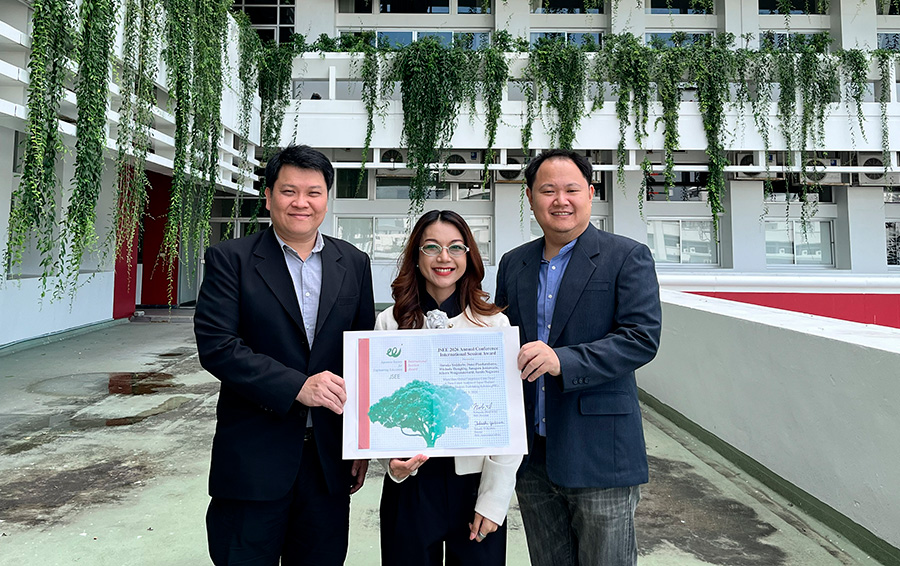
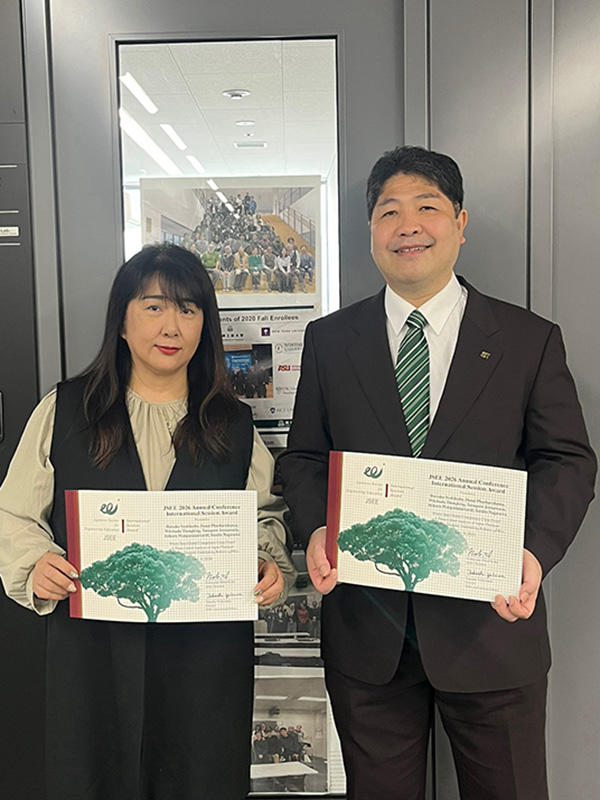
吉久保肇子教授、長澤純人教授とタイKMUTTの共同研究者4名がJSEE 2026 International Session Awardを受賞 Professors Hatsuko Yoshikubo and Sumito Nagasawa and Four Collaborators from KMUTT, Thailand, Receive the JSEE 2026 International Session Award
2026/11/17
- 工学部
受賞者
芝浦工業大学(SIT、日本)Shibaura Institute of Technology (SIT), Japan
吉久保 肇子 教授(工学部)Hatsuko Yoshikubo, Professor, College of Engineering
長澤 純人 教授(工学部)Sumito Nagasawa, Professor, College of Engineering
モンクット王工科大学トンブリ校(KMUTT、タイ)
King Mongkut's University of Technology Thonburi (KMUTT), Thailand
Danai Phaoharuhansa, Assistant Professor and Head of the Department of Mechanical Engineering
Witchuda Thongking, Lecturer, Department of Control System and Instrumentation Engineering
Tanagorn Jennawasin, Lecturer, Department of Control System and Instrumentation Engineering
Atikorn Wongsatanawarid, Assistant Professor, Department of Mechanical Engineering
学会・大会名
第74回年次大会・工学教育研究講演会 The 74th Annual Conference of Japanese Society for Engineering Education
賞名
国際セッション賞 2026 International Session Award
発表題目
国際セッション賞 2026 International Session Award
発表題目
グローバル・コンピテンスはどこから生まれるのか?
― ロボティクスをテーマとした国際PBLに参加した日タイの工学系学生3コホートの分析 ―
Where Does Global Competence Come From? A Three-Cohort Analysis of Japan-Thailand Engineering Students Undertaking Robotics gPBLs
― ロボティクスをテーマとした国際PBLに参加した日タイの工学系学生3コホートの分析 ―
Where Does Global Competence Come From? A Three-Cohort Analysis of Japan-Thailand Engineering Students Undertaking Robotics gPBLs
研究内容
本研究では、芝浦工業大学(SIT)とモンクット王工科大学トンブリ校(KMUTT)の工学系学生85名を対象に、2025~2026年に実施された3つの参加者集団(コホート)を分析しました。その結果、英会話能力の自己評価には統計的に有意な変化が認められなかった一方で、グローバル・コンピテンスには有意な向上が確認されました。 特に、直近のコホートに参加した日本人学生では、文化的な違いに対する抵抗感の低減や受容的な態度の向上が顕著に見られました。これらの結果は、グローバル・コンピテンスの育成には英語力だけでなく、技術的な共同作業やチーム内の相互作用などが重要な役割を果たしている可能性を示唆しています。 また、KMUTT所属の共著者4名のうち、Danai Phaoharuhansa氏、Witchuda Thongking氏、Atikorn Wongsatanawarid氏の3名は芝浦工業大学の卒業生です。現在はKMUTTの教員として活躍しながら、母校との共同研究を継続しており、国際教育を通じて築かれた学術的なつながりが、卒業後も発展していることを示しています。
This study analysed 85 engineering students across three cohorts (2025–2026) from Shibaura Institute of Technology (SIT) and King Mongkut's University of Technology Thonburi (KMUTT). The findings showed significant improvements in global competence despite no significant changes in self-assessed English conversation ability. Notably, Japanese students in the most recent cohort showed substantial improvements in their comfort with cultural differences. These findings suggest that factors beyond English proficiency, including technical collaboration and team dynamics, may play important roles in developing global competence. Three of the four KMUTT co-authors—Dr. Danai Phaoharuhansa, Dr. Witchuda Thongking, and Dr. Atikorn Wongsatanawarid—are alumni of Shibaura Institute of Technology. Their continued collaboration with their alma mater highlights the lasting academic connections fostered through international education.
This study analysed 85 engineering students across three cohorts (2025–2026) from Shibaura Institute of Technology (SIT) and King Mongkut's University of Technology Thonburi (KMUTT). The findings showed significant improvements in global competence despite no significant changes in self-assessed English conversation ability. Notably, Japanese students in the most recent cohort showed substantial improvements in their comfort with cultural differences. These findings suggest that factors beyond English proficiency, including technical collaboration and team dynamics, may play important roles in developing global competence. Three of the four KMUTT co-authors—Dr. Danai Phaoharuhansa, Dr. Witchuda Thongking, and Dr. Atikorn Wongsatanawarid—are alumni of Shibaura Institute of Technology. Their continued collaboration with their alma mater highlights the lasting academic connections fostered through international education.
研究目的
本研究は、ロボティクスをテーマとした国際的な課題解決型学習(gPBL)への参加が、工学系学生のグローバル・コンピテンスの育成にどのように寄与するのかを明らかにすることを目的としています。
This study aimed to investigate how participation in international robotics-based global Project-Based Learning (gPBL) contributes to the development of engineering students' global competence.
今後の展望・課題
This study aimed to investigate how participation in international robotics-based global Project-Based Learning (gPBL) contributes to the development of engineering students' global competence.
今後の展望・課題
今後は、国際的な工学分野の共同学習が学生のグローバル・コンピテンスの育成にどのように寄与するかについて、コミュニケーション、技術的役割分担、AIを活用した学習に着目しながら、引き続き検証を進めていきます。
The research team will continue investigating how international engineering collaboration supports students' global competence, with particular attention to communication, technical roles, and AI-assisted learning.
The research team will continue investigating how international engineering collaboration supports students' global competence, with particular attention to communication, technical roles, and AI-assisted learning.