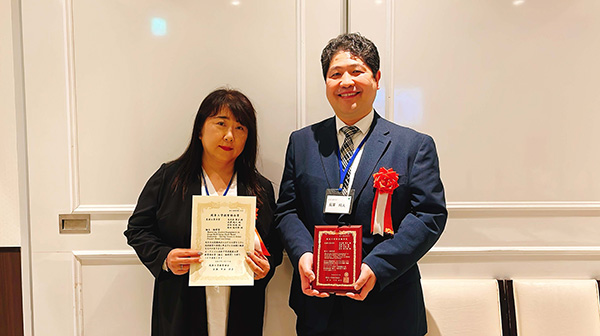
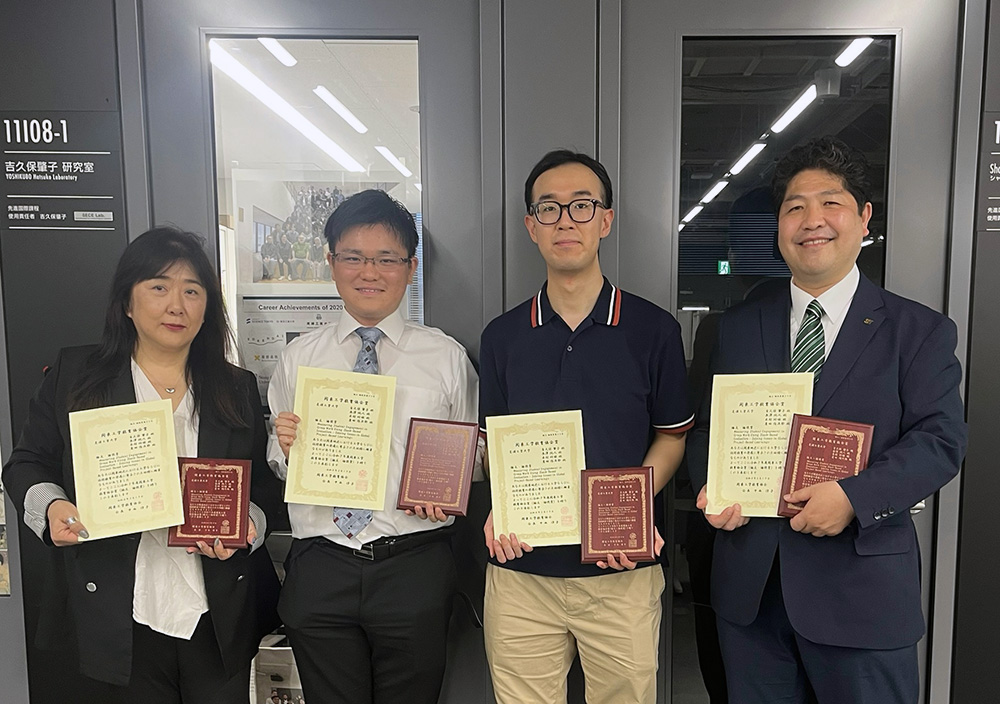
吉久保肇子教授、長澤 純人教授、岩田 侑次郎さん、木村 玲雄さんが関東工学教育協会賞を受賞
- 工学部
- 機械工学専攻
受賞者
所属
吉久保 肇子 教授(工学部) Professor Hatsuko Yoshikubo (College of Engineering)
長澤 純人 教授(工学部) Professor Sumito Nagasawa (College of Engineering)
岩田 侑次郎 さん(機械工学専攻)※受賞当時 Yujiro Iwata (Mechanical Engineering, Graduate School of Engineering and Science; affiliation at the time of the award)
木村 玲雄 さん(機械工学専攻)※受賞当時 Leo Kimura (Mechanical Engineering, Graduate School of Engineering and Science; affiliation at the time of the award)
大会名
The Kanto Society for Engineering Education
賞名
Kanto Society for Engineering Education Award (Paper and Article)
受賞対象論文
研究内容
本研究は、本学の教員と当時の大学院生による共同研究として、オンラインを活用した国際共同PBL(global Project-Based Learning: gPBL)において、学生一人ひとりのグループワークへの関与や貢献を、より公平かつ客観的に評価する手法を提案したものです。オンラインでの国際協働では、教員が個々の学生の活動プロセスを十分に把握することが難しく、グループ内で貢献度に偏りが生じることが課題となっています。本研究では、コミュニケーションプラットフォーム「Slack」上での活動を活用して学生の関与度を可視化・評価する方法を導入しました。その結果、個々の貢献をより明確に把握できるとともに、学生が自らの活動を振り返り、主体的にグループワークへ参加することを促す可能性が示されました。
This study, conducted collaboratively by SIT faculty members and graduate students, proposes a method for evaluating individual students’ levels of engagement and contribution more fairly and objectively, in online global Project-Based Learning (gPBL). In learning environments featuring online collaboration between international students, it can be difficult for instructors to fully observe each student's learning process, and contributions may be unevenly distributed among group members. To address this challenge, the study introduced an evaluation method that uses students' activity on the communication platform ‘Slack’ to quantify and assess their engagement in group work. The findings suggest that this approach can provide a clearer picture of individual contributions while also encouraging students to reflect on their own activities and participate more actively in collaborative learning.
研究目的
本研究の目的は、多国籍・多文化の学生がオンラインで協働するgPBLにおいて、グループとしての成果だけでは捉えにくい学生一人ひとりの学習プロセスや貢献を可視化し、公平に評価する方法を構築することです。特に、グループ内で一部の学生に作業が偏ることや、教員がオンライン上での個々の活動を十分に把握できないという課題に着目しました。Slack上に蓄積されるコミュニケーションや活動の記録を評価に活用することで、学生の関与度を客観的に把握するとともに、評価の透明性を高め、学生自身の主体的な参加を促すことを目指しました。
The purpose of this study was to develop a method for visualising and fairly evaluating the learning processes and individual contributions of students participating in online gPBLs with multinational and multicultural peers—elements that cannot always be captured by assessing group outcomes alone. Particular attention was paid to challenges such as an uneven distribution of workload within groups and the difficulties instructors face in observing individual students' online activities. By incorporating communication and activity records accumulated on Slack into the assessment process, the study sought to provide a more objective indication of student engagement, increase transparency in assessment, and encourage students to participate more actively in collaborative work.
今後の展望
オンラインを活用した国際協働学習は、学生が国や文化、専門分野を越えて協働する機会を広げる一方、個々の学生の学習プロセスや貢献をどのように把握し、公平に評価するかが重要な課題となっています。本研究で提案した手法を基盤として、今後は非言語情報のAI分析の導入も含め、対面・オンライン双方のgPBLにおける評価方法のさらなる検討と改善を進めるとともに、多様な背景を持つ学生の協働プロセスをより適切に評価する方法について検討していきます。さらに、デジタルツールを活用して、個々の学生の学習プロセスやグループ活動への関与を可視化することを通じて、学生の主体的な参加と実質的な国際協働を促す、より公平で効果的な工学教育の実現につなげていきます。
Online international collaborative learning provides students with increasing opportunities to work across national, cultural, and disciplinary boundaries. At the same time, understanding individual learning processes and contributions and ensuring fairness in assessment remain important challenges. Building on the approach proposed in this study, future research will further explore and refine assessment methods - including the introduction of nonverbal AI analysis - for both face-to-face and online gPBLs and examine how the collaborative processes of students from diverse backgrounds can be better evaluated. By using digital tools to make students’ individual learning processes and involvement in group activities more visible, this work ultimately aims to contribute to more equitable and effective engineering education that promotes active student participation and meaningful international collaboration.