Sports Engineering Course
Course Overview
Advancing human potential and designing healthy longevity through sports engineering
We cultivate individuals who can contribute to promoting people’s health by developing and applying methods that enhance and extend human physical and mental capabilities. To that end, students acquire specialized knowledge and skills in sports engineering, as well as a strong sense of research ethics.
In addition, through research that seeks to elucidate the mechanisms of life phenomena—such as development and aging—from various perspectives ranging from the molecular and genetic levels to cells and individuals, as well as through the development of science and technology that supports healthcare and daily living, students contribute to extending healthy life expectancy and improving people’s quality of life (QOL).
Research Fields and Areas, Keywords for Learning
- Training
- Nutrition
- Aging
- Psychology
- Health
- Brain
- Sports
- Physical Exercise
- Skeletal Muscle
Curriculum
1st year
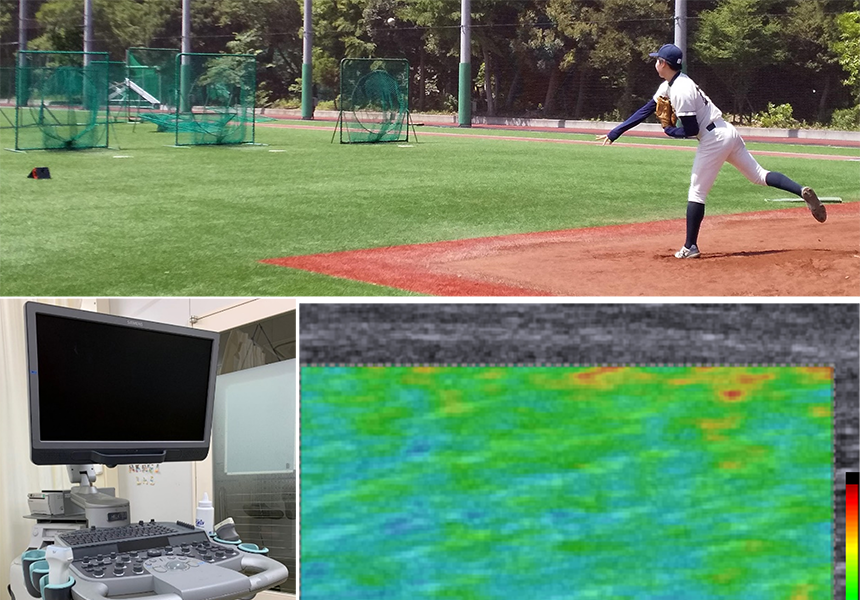
Introduction to Sports Engineering
Acquiring fundamental specialized knowledge and skills in the field of life sciences.
From fundamental research areas such as physiology and gerontology to applied research such as measuring body movements through sensing technologies, this class introduces prior studies and the latest examples across various fields of sports engineering, helping students gain a comprehensive understanding of the discipline.
2nd year
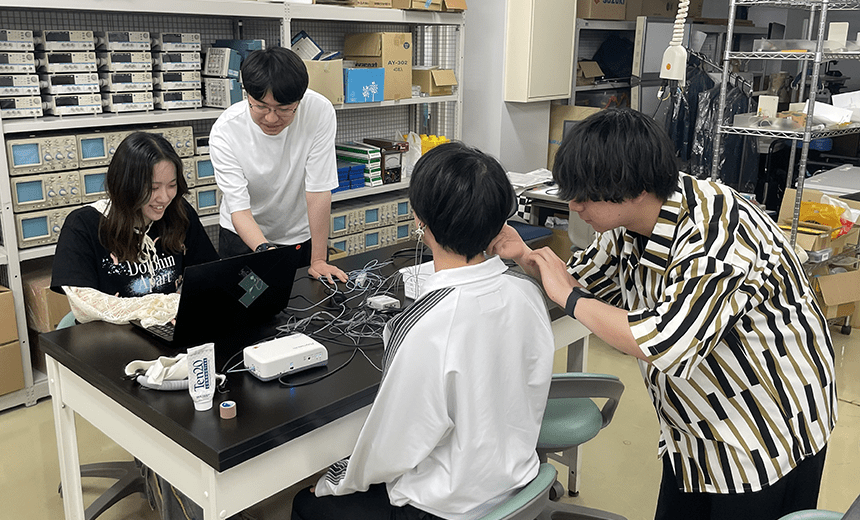
Practical Exercises in Sports Engineering Experiments 2
Selecting the primary field for your desired career path and acquiring foundational knowledge in your specialized area.
Focusing on experiments related to psychophysiology and motion analysis, students learn how to use various sensors and measurement devices, methods for collecting data from human subjects, techniques for analyzing the acquired data, how to interpret the results, and how to summarize their findings.
3rd year
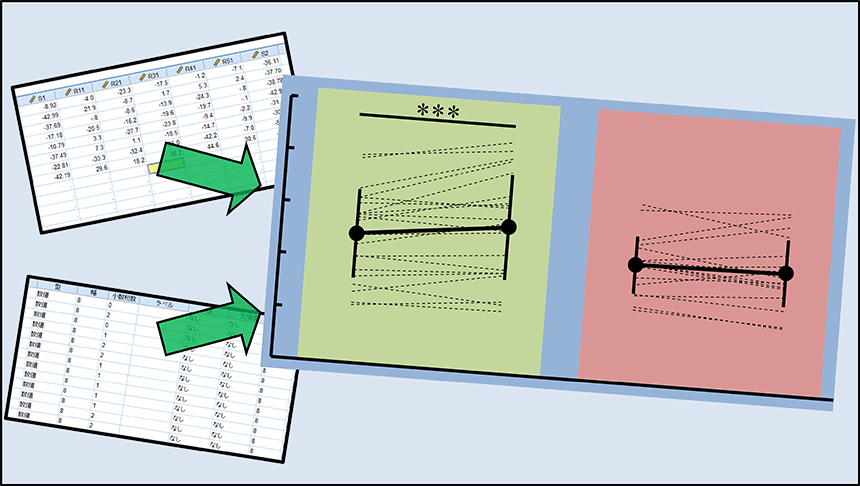
Research Methods in Sports Engineering
Acquiring advanced specialized knowledge for career advancement and foundational knowledge for conducting graduation research.
Using academic papers related to sports engineering, students learn how to calculate sample sizes in advance, as well as commonly used statistical methods, and study how to construct experimental designs. Based on what they learn in this class, they then develop their own individual research plans.
4th year
Faculty and Researchers
Course Data
|
Degree
|
Bachelor of Engineering
|
|
|---|---|---|
|
Campus
|
Years 1-4: Omiya Campus
|
|
|
Number of people
|
Number of faculty members
|
|
|
Admission capacity
|
60 people
|
|
|
Number of students
|
||
|
Number of students entering graduate school
|
-
|
|
Other Data
| Enrollment Trends (Persons) | 2025 Annual |
|---|---|
| Enrollees | |
| Gender ratio |