Biomedical Engineering Course
Course Overview
Advancing the science of life and contributing to human health through biomedical engineering technologies
We cultivate individuals who can contribute to medical and welfare fields by restoring and supporting biological functions. To that end, students acquire broad specialized knowledge and skills in biomedical engineering, logical thinking ability, and a strong sense of research ethics. In addition, through research aimed at elucidating the mechanisms of life phenomena—such as development and aging—from various perspectives ranging from the molecular and genetic levels to cells and individuals, as well as through the development of science and technology that supports healthcare and daily living, students contribute to extending healthy life expectancy and improving people’s quality of life (QOL).
Research Fields and Areas, Keywords for Learning
- Diagnostic equipment
- Rehabilitation
- Prosthetics and Orthotics
- AI
- Artificial Organs
- Regenerative Medicine
- Simulation
- Therapeutic Equipment
- Assistive Devices
- Medical Devices
Curriculum
1st year
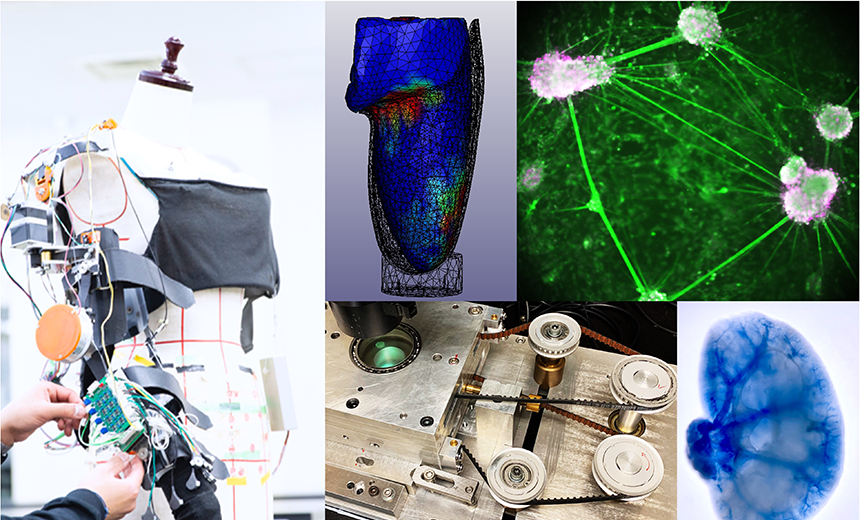
Basics of Biomedical Engineering
Acquiring fundamental specialized knowledge and skills in the field of life sciences
This class introduces prior studies and the latest examples from various research fields in biomedical engineering—including cell engineering, artificial organs, biomaterials, biofluid mechanics, medical technologies, welfare engineering, neuro-rehabilitation engineering, ergonomics, and biophysical engineering—providing students with a comprehensive understanding of the discipline.
2nd year
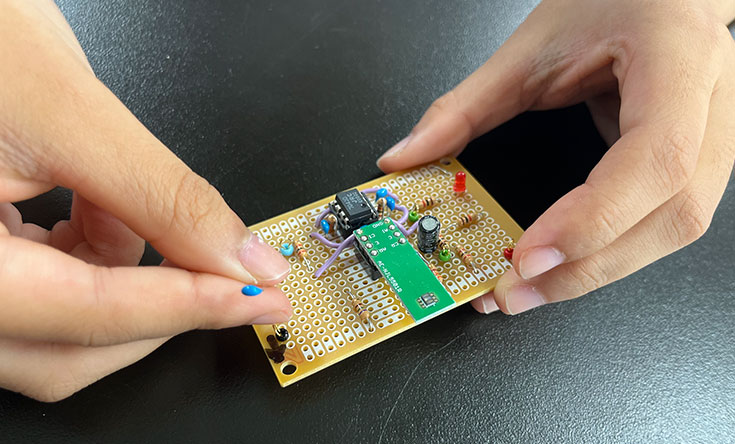
Practice in Biomedical Electronics
Selecting the primary field for your desired career path and acquiring foundational knowledge in your specialized area
This class offers hands-on experiments that allow students to experience elemental technologies in the fields of mechanical engineering, electrical engineering, and information processing. In particular, students learn how to use equipment for measuring electrical characteristics, assemble digital circuits, and create analog circuit boards.
3rd year
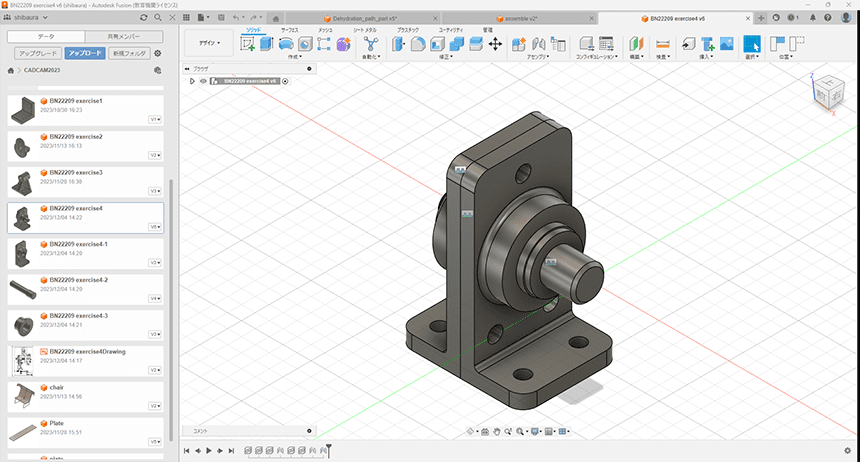
Practice in CAD/CAM
Acquiring advanced specialized knowledge for career advancement and foundational knowledge for conducting graduation research
Students learn practical skills through both classroom instruction and hands-on exercises using CAD/CAM/CAE systems. The class covers 2D drafting with CAD, 3D modeling, motion and strength analysis using CAE, fabrication with 3D printers, the basics of general-purpose and NC machine tools, and generating machining data using CAM.
4th year
Faculty and Researchers
Course Data
|
Degree
|
Bachelor of Engineering
|
|
|---|---|---|
|
Campus
|
Years 1-4: Omiya Campus
|
|
|
Number of people
|
Number of faculty members
|
|
|
Admission capacity
|
60 people
|
|
|
Number of students
|
||
|
Number of students entering graduate school
|
-
|
|
Other Data
| Enrollment Trends (Persons) | 2025 Annual |
|---|---|
| Enrollees | |
| Gender ratio |