Bioscience Course
Course Overview
Unraveling the secrets of life and pioneering the future of food nutrition, drug discovery, and environmental sciences
We foster individuals who respect diversity, cultivate knowledge of life sciences, and develop flexible thinking skills in order to deeply understand the mechanisms of life and contribute to extending healthy life expectancy. To this end, students acquire specialized knowledge, practical techniques, and the ethical standards essential for research. They explore life phenomena—such as development and aging—from multiple perspectives, ranging from molecules and genes to cells and whole organisms, and work to elucidate their underlying mechanisms. Furthermore, through the development of scientific and technological innovations that support healthcare and daily life, they contribute to extending healthy life expectancy and improving quality of life (QOL).
Research Fields and Areas, Keywords for Learning
- Drug Discovery
- Food Nutrition
- Environment
- Microorganism
- Cellular Sensation
- Biotechnology
- Health Sciences
- Aging
- Cosmetology
- Cancer
Curriculum
1st year
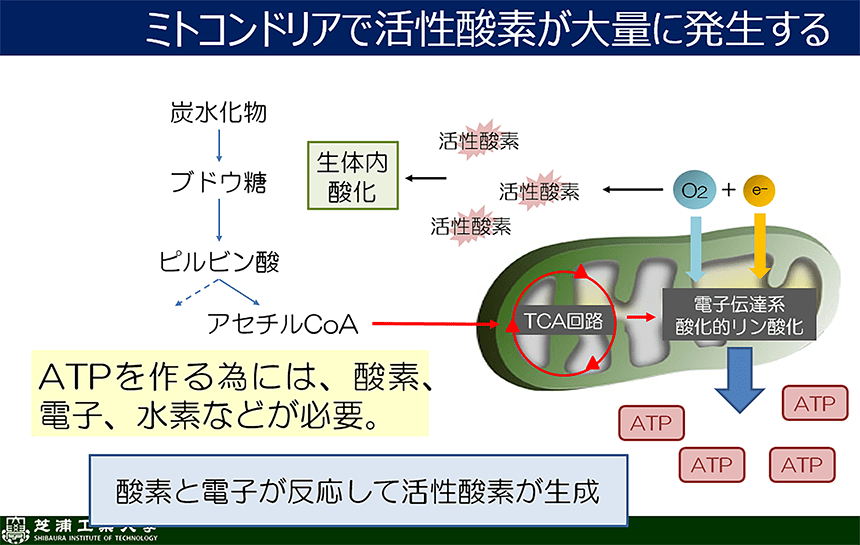
Physiology
Acquiring fundamental specialized knowledge and skills in the field of life sciences
All living organisms are sustained by the proper functioning of various physiological processes (homeostasis). In this class, students learn the fundamentals of physiology, focusing on understanding the structure and functions of human organs and organ systems—an essential foundation for studying life sciences.
2nd year
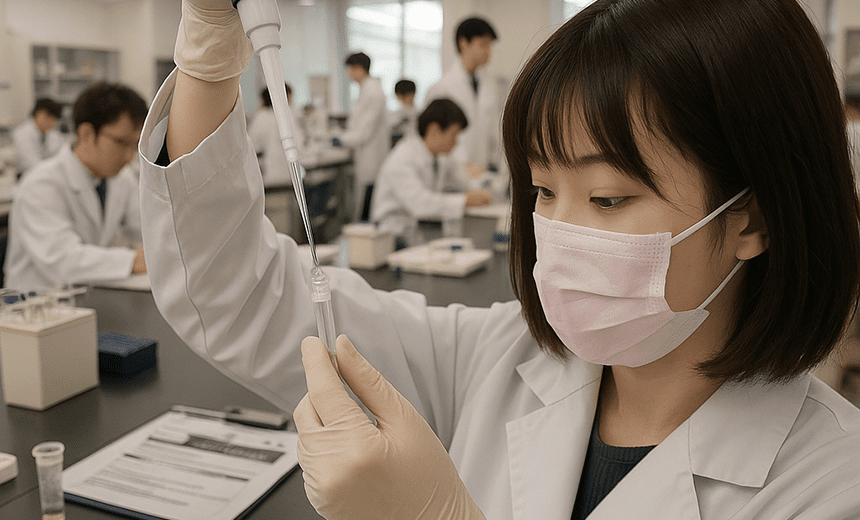
Experiments for Bioscience (Applied)
Selecting the primary field for your desired career path and acquiring foundational knowledge in your specialized area
Students acquire advanced experimental techniques in chemistry and biology, as well as skills in writing scientific reports. The class covers biochemical methods such as PCR and Western blotting, organic synthesis of compounds, analysis of environmental substances, and other laboratory techniques essential for future research work.
3rd year
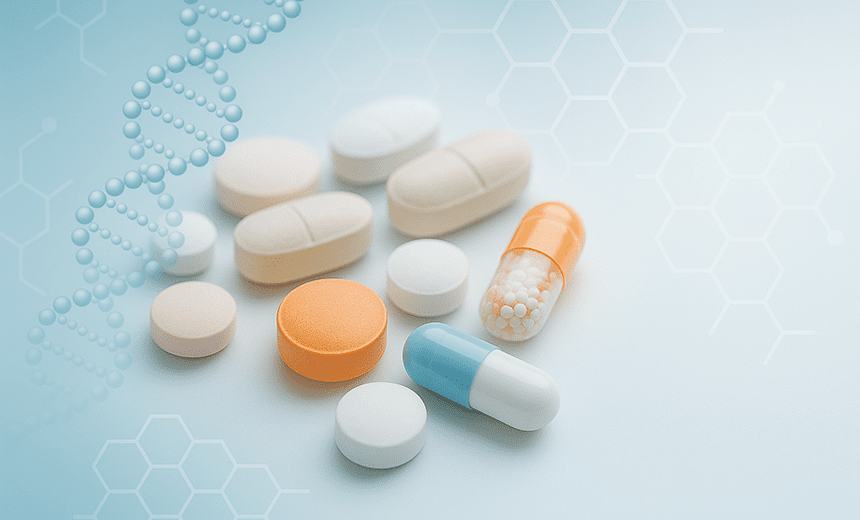
Pharmacology
Acquiring advanced specialized knowledge for career advancement and foundational knowledge for conducting graduation research
Students learn how drugs and toxins act within the body, gaining an understanding of their interactions with neurotransmitters, hormones, and other biological molecules, as well as the mechanisms underlying their efficacy and toxicity. They also acquire fundamental knowledge of pharmacological effects in various disease areas, along with adverse events and drug-induced harm.
4th year
Faculty and Researchers
Course Data
|
Degree
|
Bachelor of Engineering
|
|
|---|---|---|
|
Campus
|
Years 1-4: Omiya Campus
|
|
|
Number of people
|
Number of faculty members
|
|
|
Admission capacity
|
60 people
|
|
|
Number of students
|
||
|
Number of students entering graduate school
|
-
|
|
Other Data
| Enrollment Trends (Persons) | 2025 Annual |
|---|---|
| Enrollees | |
| Gender ratio |