New Sensory Evaluation Method Reveals How Polyphenol Structures Shape Taste Perception
- Research
Researchers developed a sensory evaluation system linking polyphenol chemical structures with bitterness, acidity, and astringency
A pilot study has developed a new sensory evaluation method that links the chemical structures of polyphenols with their distinct taste properties. Using trained human panelists, researchers showed that different polyphenols produce unique sensory effects, including bitterness, acidity, and astringency. The findings may help improve functional food design and food processing technologies while advancing understanding of how taste-related sensory pathways contribute to digestion, metabolism, and health-related responses.
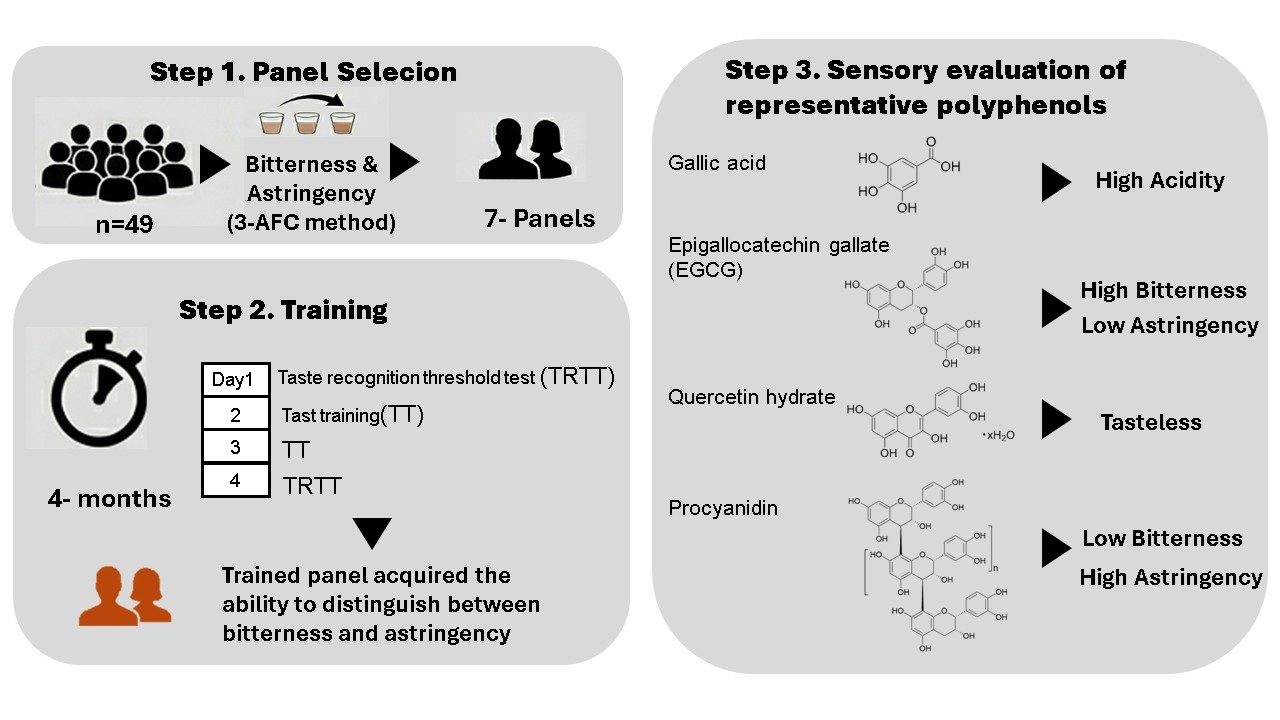
Title: Sensory evaluation system reveals how polyphenol structures shape taste perception
To address this challenge, a research team led by Professor Naomi Osakabe from the Department of Functional Control Systems, Graduate School of Engineering and Science, Shibaura Institute of Technology, Japan, along with Ms. Hitomi Nakamura and Ms. Moeka Ogata from the same institute, developed a structured sensory evaluation system using trained human panelists to quantitatively analyze the taste characteristics of polyphenols and connect them with their chemical structures. Their findings were published in Volume 15, Issue 8 of the journal Foods on April 17, 2026.
The study focused on four representative polyphenols with different chemical structures: gallic acid, quercetin hydrate, epigallocatechin gallate (EGCG), and a procyanidin-rich fraction derived from cocoa. Before testing, seven carefully selected panelists underwent four months of intensive sensory training designed to improve their ability to distinguish acidity, bitterness, and astringency. The researchers combined multiple sensory evaluation approaches, including flavor profile analysis, quantitative descriptive analysis, and three-alternative forced-choice testing, to ensure reliable results.
The experiments revealed clear sensory differences between the compounds. Gallic acid produced strong acidity similar to citric acid, while EGCG, a major compound in green tea, generated pronounced bitterness and mild astringency. The procyanidin-rich fraction showed intense astringency, likely due to its polymerized structure interacting with salivary proteins. In contrast, quercetin hydrate displayed little detectable taste, mainly because of its low water solubility.
Prof. Osakabe explained, “While polyphenols are known to produce bitter and astringent sensations, very few studies have objectively evaluated these properties using trained human panels. We wanted to establish a reliable system that could scientifically connect sensory perception with chemical structure.”
The researchers believe these findings could significantly benefit the food industry, particularly in the development of functional foods and beverages. By understanding how molecular structures influence taste, manufacturers may be able to improve food palatability while preserving beneficial health properties. The study may also contribute to designing products with targeted sensory effects that encourage healthier dietary habits.
Another important aspect of the research involves the growing recognition that taste receptors are not limited to the mouth. Recent studies suggest that bitter and astringent compounds can interact with receptors in the digestive system, influencing hormone release, glucose regulation, and gastrointestinal function. Understanding the sensory characteristics of polyphenols may therefore help explain some of their health-promoting effects.
Prof. Osakabe noted, “Our long-term goal is to create predictive models that can estimate sensory properties directly from chemical structures. This could support the future development of next-generation functional foods tailored for both taste and health benefits.”
Overall, the study provides one of the first systematic frameworks for quantitatively evaluating polyphenol taste characteristics using trained human panels. By linking molecular structure with sensory perception, the research opens new opportunities for food science, nutrition research, and functional food innovation while improving understanding of how taste-related pathways contribute to human health.
Reference
|
Title of original paper: |
Development of a Sensory Evaluation Method for Polyphenols |
|
Journal: |
Foods |
|
DOI: |
Additional infotmation for EurekAlert
| Latest Article Publication Date: | 17 April 2026 |
| Method of Research: |
Experimental study |
| Subject of Research: | People |
| Conflicts of Interest Statement: | Kenta Aso and Chika Tagata report a relationship with ITO EN Ltd. that includes employment. They declare that they have no known competing financial interests or personal relationships that could have appeared to influence the work reported in this paper. |
Authors
About Professor Naomi Osakabe from SIT, Japan
Dr. Naomi Osakabe is a Professor at the Department of Bioscience and Engineering, Shibaura Institute of Technology, Tokyo, Japan. Her research focuses on nutrition and health science, particularly the chemistry, sensory properties, and physiological effects of polyphenols. She studies free radicals, taste mechanisms, and electrochemical analysis of food compounds to better understand their health benefits. Professor Osakabe has authored 163 scientific publications with more than 6,437 citations. Her work contributes to advancing functional food research and clarifying the relationship between food-derived compounds, sensory perception, and human health through interdisciplinary approaches in agricultural and food chemistry research globally.
Funding Information
This work was supported by JSPS KAKENHI (Grant Number: 23KJ1922).