Mathematical Sciences Course
Course Overview
Unveiling the unknown and pioneering new fields through pure and applied mathematics
We cultivate individuals who can logically solve various problems across a wide range of fields—including science, education, and industry—by identifying concrete issues demanded by society and applying creative ideas grounded in systems thinking. To that end, students acquire specialized knowledge in mathematical sciences and professional ethics, and develop applied skills such as simulation techniques based on mathematical theory. In addition, we conduct education and research in mathematical sciences, integrating both pure and applied mathematics as two complementary pillars. By cultivating individuals with specialized expertise in mathematics and interdisciplinary fields, we contribute to the advancement of mathematical sciences and to society as a whole.
Research Fields and Areas, Keywords for Learning
- Programming
- Image Processing
- Machine Learning
- Education
- Computer Simulation
- Financial Engineering
- Supercomputer
- Data Science
- Numerical Analysis
- Algorithm
Curriculum
1st year
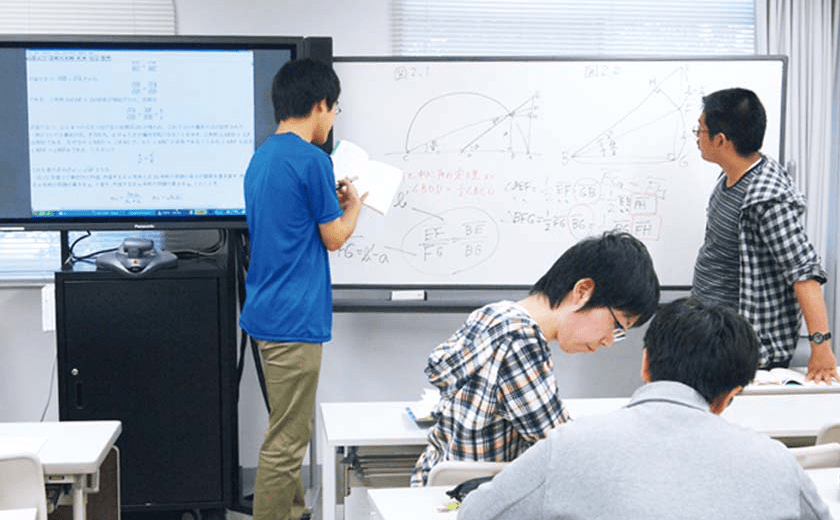
Basic Seminar on Mathematical Sciences
Acquiring fundamental specialized knowledge and skills in the field of mathematical sciences
Positioned as an introductory seminar, this class assigns each student to a research laboratory. Its aim is for students to learn fundamental knowledge and basic methods of mathematical reasoning common to all areas of mathematical sciences, while also gaining exposure to aspects of the research conducted in their assigned laboratory.
2nd year
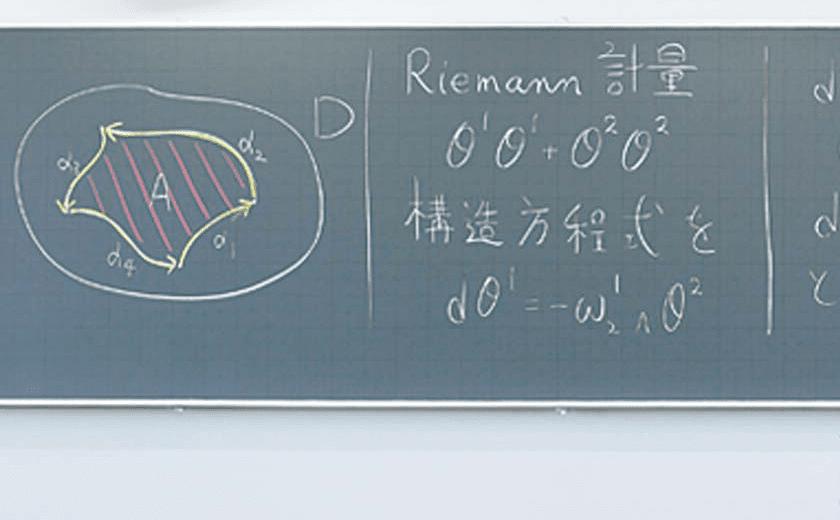
Geometry 1
Selecting the primary field for your desired career path and acquiring foundational knowledge in your specialized area
As preparation for understanding “manifolds,” an important concept in modern geometry, this class first covers the curvature of curves and surfaces, and also introduces the basics of topology, including the abstract definition of a topological space.
3rd year
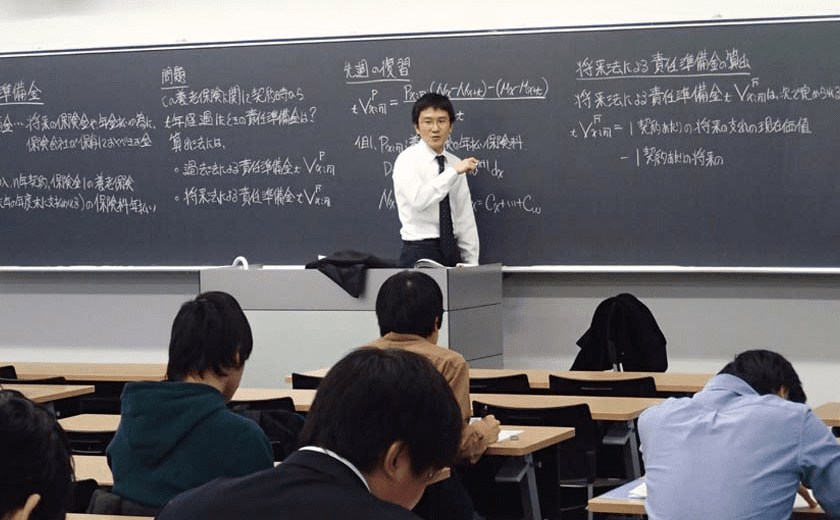
Financial Engineering
Acquiring advanced specialized knowledge for career advancement and foundational knowledge for conducting graduation research.
“Quants” are professionals who work in financial institutions using mathematical methods from probability theory and statistics. In this class, students learn about the work performed by quants and acquire the fundamental mathematical knowledge required for the role.
4th year
Faculty and Researchers
Course Data
|
Degree
|
Bachelor of Engineering
|
|
|---|---|---|
|
Campus
|
Years 1-4: Omiya Campus
|
|
|
Number of people
|
Number of faculty members
|
|
|
Admission capacity
|
75 people
|
|
|
Number of students
|
||
|
Number of students entering graduate school
|
-
|
|
Other Data
| Enrollment Trends (Persons) | 2025 Annual |
|---|---|
| Enrollees | |
| Gender ratio |